US deleveraging and consumption, in progress
Roula Khalaf, Editor of the FT, selects her favourite stories in this weekly newsletter.
There was some good news in this morning’s Personal Income and Outlays report for January, though not quite enough to get excited about.
Personal income climbed 1 per cent, well above expectations, and the savings rate increased for the first time since last July, from 5.4 per cent in December to 5.8 per cent.
Largely owing to the tax cut compromise, income climbed enough that the impressive rise in the savings rate was simultaneous with another increase in spending (of 0.2 per cent). Things could be worse.
But as noted by Dan Indiviglio at the Atlantic Business Channel, the rate of increase in spending was the slowest since last July, and it’s not clear why:
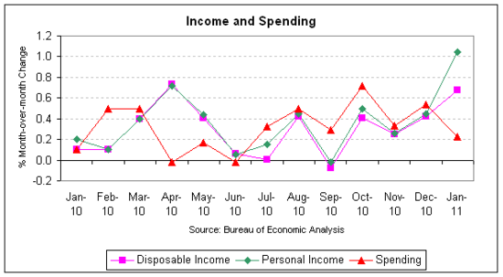
This is something to watch, because as we mentioned in our recent, long discussion of household deleveraging, personal consumption has carried a heavy burden in getting the US economy out of its mid-year 2010 slump.
Among the possible causes behind the slowdown in the rate of spending growth last month are a post-holiday hangover, bad weather, people not realising that they have more money in their bank accounts, or simply a reversion towards the 6 per cent savings rate at which people had seemed to settle until the recovery picked up at the end of last year.
There’s another issue here that might rile up the political watchers among you.
We mentioned a few times at the end of last year that although the tax cut compromise would help prevent a contractionary shock to household incomes, it was also poorly constructed as a stimulus package (primarily because higher-income earners were likely to save more of their windfall than those down the ladder).
Well, January was the first month after the compromise passed, and the savings rate has shot upward anyways.
Indiviglio reckons that 70 per cent of the rise in personal income was a result of the tax cut. Should we be puzzled that so much of it was saved, or was the mildness of the January rise in spending partly the inevitable result of the tax cut bill’s flawed design?
We put it to you.
Related links:
Household deleveraging and consumer-led growth – FT Alphaville
Deleveraging and the tax compromise – FT Alphaville
Taxes in Wonderland – FT Alphaville

Comments